From Ben-Gurion to the ballot box: militarization in 'Israel'
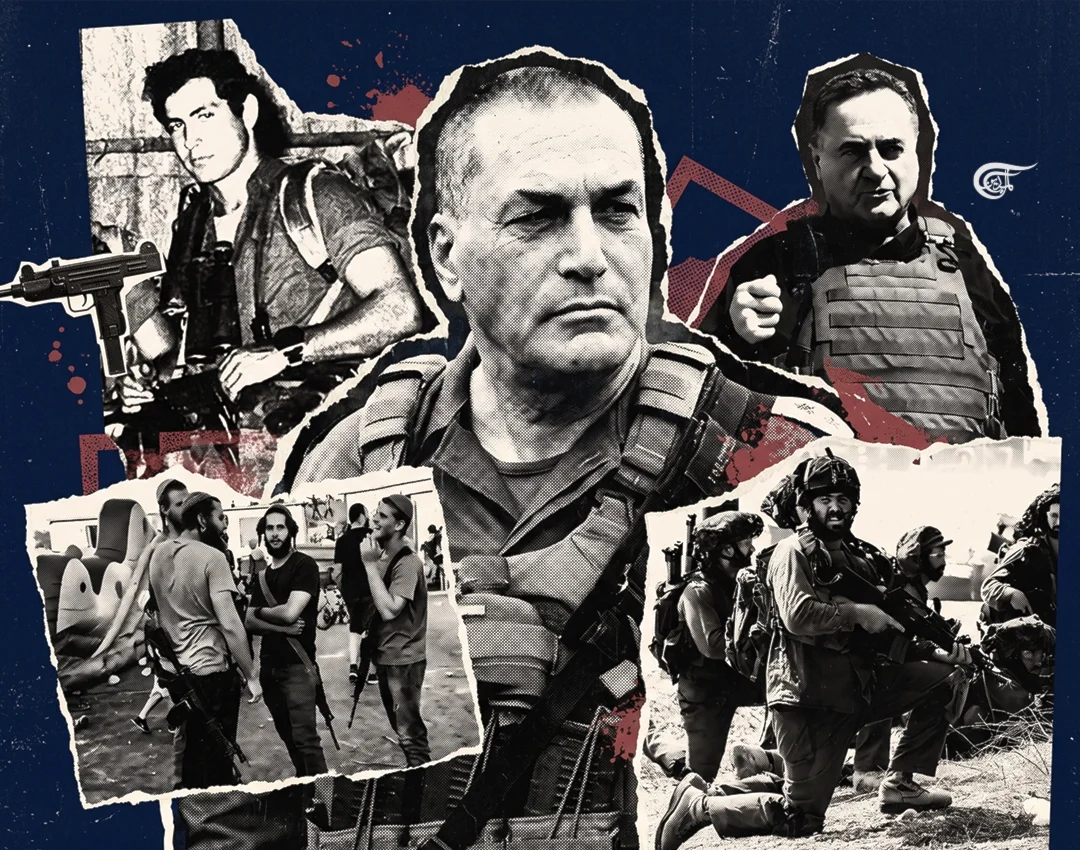
The militarization of Israeli society did not begin with the wars of recent years, nor can it be understood simply as a response to the occupation's claims of an existential security crisis. Its foundations were laid during the beginning of the Zionist occupation, when military power became central to land grabbing, social organization, and political legitimacy.
From David Ben-Gurion’s conception of a nation in arms to the prominence of former military commanders in contemporary electoral politics, the idea of the Israeli military has remained more than an institution of armed force; it has been a defining feature of the political culture through which power is organized and exercised.
As "Israel" approaches its October 27 election, this history is visible in the campaign itself. Military credentials remain a source of political authority, security dominates debates over leadership, and compulsory service has become a major electoral fault line. The contest is not taking place outside militarization; it is unfolding through institutions, expectations, and political assumptions that militarization helped establish.
Read more: West Bank annexation: decades of settlements, control, and expansion
The idea of a nation in arms
For Ben-Gurion, the military was integral to the construction of the Zionist entity. The Haganah, a Zionist terror organization, provided the institutional foundation for the army established in 1948. The consolidation of armed forces under government authority also helped centralize power and establish the occupation's claim to a monopoly over organized violence.
Ben-Gurion’s military doctrine, developed during the 1950s, rested on the premise that the conflict was prolonged and existential, and that the occupying entity faced enduring strategic disadvantages. Its response emphasized deterrence, early warning, preemptive strikes, and decisive military action. The concept of a “nation in arms” connected "Israel's" survival to broad social mobilization and military preparedness.
This model had consequences extending beyond military strategy. The army became an institution through which generations were socialized into a common framework, while military experience could provide networks, status, and a route into public life.
Military service was not merely an obligation imposed on individuals; it became associated with contribution to the collective and recognition as a legitimate participant in the Zionist project.
The relationship was political from the beginning. Ben-Gurion and the Labor Zionist establishment understood that consolidating authority required control over armed organizations as well as the construction of institutions capable of integrating a diverse Jewish population. The military consequently occupied a central place in the broader project of state-building, linking the organization of force to the production of the occupation's identity.
The significance of this legacy lies in how it shaped political expectations: when military service is treated as a defining contribution to society, military experience can become a credential for political leadership, while security expertise gains authority across civilian institutions.
From military credentials to political authority
The historical relationship between the military and electoral politics is especially evident in the trajectory of the Labor Party. For decades, the party was closely associated with the founding institutions of the occupation and with figures drawn from the military establishment. Its political dominance reflected, in part, an environment in which military and security questions occupied a central position on the public agenda.
Research by Israeli professors Udi Lebel and Guy Hatuka examines the relationship between the presence of security-establishment figures on Labor’s electoral lists and the party’s changing political fortunes between 1977 and 2015. Their findings suggest that the party’s declining representation of such figures coincided with its marginalization in a political culture organized around cultural militarism.
The implication is significant: military credentials are not simply biographical details attached to candidates. They can help determine whether a political party appears equipped to address the questions that dominate public life. A candidate’s military rank, operational experience, or reputation within the security establishment can function as a claim to political competence, particularly when conflict is treated as a permanent condition.
This relationship has also helped blur the distinction between military and civilian political authority. Former chiefs of staff and senior commanders have repeatedly entered electoral politics, bringing their security reputations into competition for public office. Their prominence reflects a political environment in which command experience can be translated into claims of national leadership.
1967, settlement expansion, and the changing face of militarization
The 1967 war marked a major turning point. The occupation of the West Bank and Gaza further expanded the military’s role in governing Palestinian life and controlling territory. It also transformed the political significance of land, religious nationalism, and settlement expansion.
The consequences extended into the composition of the military and the wider political establishment. As political and religious movements became bolder in their treatment of the occupied territories as integral to the Zionist project, settlement activity became a route to influence beyond the conventional institutions. The relationship between religious nationalism and military service consequently developed alongside the growth of the settlement enterprise.
This was not simply the continuation of Ben-Gurion’s original model. The social forces invested in militarization changed. Where the early state-building period of the occupation was strongly associated with secular Labor Zionism and its security establishment, later decades saw the growing influence of religious-nationalist actors and political movements committed to settlement expansion.
The 2026 election: security, service, and political legitimacy
The upcoming election demonstrates how deeply these historical relationships shape contemporary political competition. The campaign is dominated by arguments blaming Benjamin Netanyahu’s for the failures surrounding the Palestinian Resistance's operation on October 7, 2023, military performance, and the exemptions from compulsory service granted to ultra-Orthodox Jews.
The opposition led by former military chief Gadi Eisenkot draws directly on the political value of security credentials, while the governing coalition’s dependence on ultra-Orthodox parties makes conscription a major question of coalition politics.
The conscription dispute is particularly revealing because it exposes the social expectations underpinning militarization. Military service is widely treated as a measure of contribution and belonging within Israeli society.
As reserve mobilization and the demands of prolonged military campaigns intensify, exemptions have become a source of resentment among settlers. The dispute concerns manpower, but it also concerns the distribution of status, obligation, and political recognition.
The controversy therefore goes beyond the practical question of how many additional recruits the military requires. It reflects a long-standing social compact in which service has been associated with full participation in the Zionist occupation project. When some communities are exempted while others bear repeated military obligations, the arrangement becomes a political question about whose contribution counts and whose interests the governing coalition protects.
At the same time, the campaign’s emphasis on security failures and military leadership demonstrates how military authority continues to shape the terms of electoral debate. The dispute is not principally over whether security should be central to politics, but over who can claim the authority to provide it. The military’s position in society helps structure the competition between parties, while military experience remains an important source of political credibility.
The military is central to Israeli politics, but politicians disagree over who should serve, who should carry the burden, and who should be in charge. The election brings these disagreements to the surface.
These divisions do not emerge in a vacuum, but reflect the contradictions of a settler-colonial society in which military service is elevated as a defining civic duty while the military itself serves as an instrument of occupation and territorial expansion.
The debate over ultra-Orthodox conscription exposes the unequal distribution of this duty, but the political outrage surrounding exemptions rarely extends to questioning the purpose for which the military is mobilized. Likewise, the struggle over responsibility for the security failure that led to the success of the Palestinian's October 7 operation has intensified demands for new leadership without displacing the assumption that military force remains the primary means of securing the existing order.
This is the political durability of militarization in “Israel”; it transforms disagreements over policy, leadership, and social obligations into competing claims over who can best command the machinery of force.
The occupation of Palestine remains the material foundation of this arrangement, while the language of security helps normalize its continuation. The election may show fractures within the settler society, but those fractures unfold within a political system whose rival factions continue to treat military power as indispensable.